You are not eating real food every day. This is not a question, this is a statement. What, I am off my mind? No, I am certainly not. If you think I am talking nonsense, then you need more reading on “industrial agriculture” and “sustainable agriculture”, dear reader.
Industrial Agriculture
Basically, this is a way to produce modern food by using industrial methods. Industrial agriculture is sometimes considered one of humans’ greatest successes. It has had large, complicated effects on our environment, our economy, and of course, our health problems. (1)
 |
| Completely cheap meat. |
Sustainable Agriculture
This is agriculture practices purposely preserving environmental integrity, foster integrate farming communities. It is a new method trying to increase farm profitability based on diversified activities. (2)
 |
| Not only a beautiful picture, but also where our food grow. |
Obviously the second method, sustainable agriculture sounds a lot better than industrial agriculture.
Food is essential for healthy growth and development, and industrialized food may have many negative consequences because “you are what you eat.” There is no way for you to grow naturally while eating food full of chemicals and unsanitary conditions. Chemicals commonly used in industrial agriculture are pesticides, insecticides, herbicides, fungicides, and antimicrobials. (3) These chemicals may not all seem familiar to you, but they can easily cause endocrine disruptions and cancer in humans. The excessive use of antibiotics is another practice used to keep livestock healthy, but it contributes to antibiotic resistance among humans. (3)
| If you are strong enough, you won't get sick...immediately. |
If you are thinking maybe you can simply choose to not eat industrialized food and grow vegetables in your backyard, then please take a look at the environment around you. The environmental burdens from industrial agriculture are monoculture production, toxic herbicides, insecticides, and chemical fertilizers accumulate in the water and pollute water supplies. Massive amounts of fecal waste create toxic chemicals in manure holding pits seeping poisons into the soil and air near our water and food sources which cause streams, rivers, and groundwater to gather pollutants. (3)
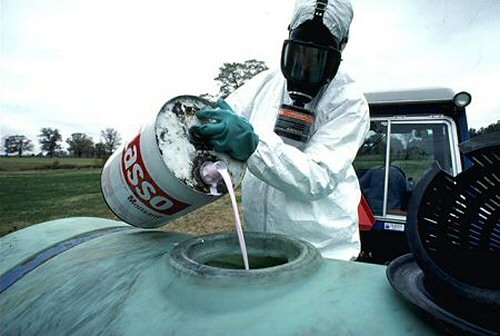 |
| This is what we have to eat? You have a choice to say no! |
Scared by these facts already? No worries, let’s move on to the solution of this problem – sustainable agriculture.
As already mentioned, sustainable agriculture raises food that is healthy for humans and animals. The magazine National Geographic states that, “The concept of sustainable agriculture embraces a wide range of techniques, including organic, free-range, low-input, holistic, and biodynamic.(5)” Land and natural resources such as water, soil and air can be replenished and ready to be used by future generations. (4) Farms raise various types of crops and animals. And all livestock are treated with respect. (4)
 |
| Different types of animals grow in the farm. |
Even though industrialized food seems to be much cheaper than natural food, however, we have to think this way: healing illness cost a lot more than healthy food. I don’t think we are one hundred percent safe from industrial food even in nowadays, but I do believe things are getting better since there are more and more people being aware of this issue. Overall, sustainable agriculture is definitely the right choice.
Work Cited List
1. Alberni Environmental Coalition
2. New dream
3. The Impacts of Sustainable and Industrial Agriculture on Human Health By Codi Gauker
4. Sustainable table. Introduction to sustainability.
5. National Geographic: Sustainable Agriculture
Picture References
Comments
http://adorablogs.blogspot.com/2010/11/foods-we-eat-could-kill-tons-of-other.html